If Your Board Only Has Three Columns, You’re Flying Blind
I often hear teams say, “We’re cross-functional, so we don’t need columns for development, testing, or deployment. We just use To Do, Doing, and Done.” It sounds lean, elegant, and efficient. Until it isn’t.
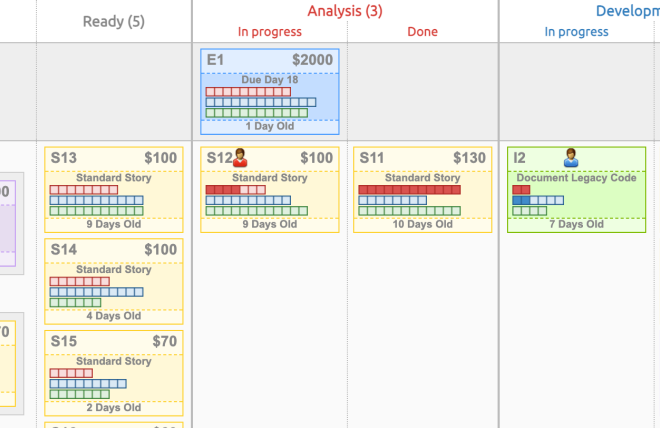
Minimal boards may look simple, but they also hide what’s really happening in your workflow. Work doesn’t just move from “Doing” to “Done.” It moves through a series of invisible states such as analysis, implementation, review, testing, validation, and release. Each of these has its own risks and delays. When those states aren’t represented, you lose visibility of where things actually slow down.
Visibility beats simplicity
A board’s purpose isn’t to mirror your org chart or to look tidy. Its job is to show reality: where value is flowing and where it’s getting stuck. Even when a single team handles everything end to end, work still waits somewhere. Maybe it’s waiting for test data, a review, an environment, or a decision. Without a visual signal for those states, those queues remain invisible.
That’s how teams end up in the classic paradox where everyone’s busy, yet nothing gets finished.
When you expand your workflow to reflect how work really moves, you don’t add bureaucracy. You add information. Suddenly you can see where flow stops, where feedback is delayed, and where quality suffers. The board becomes a diagnostic tool rather than a to-do list.
What it looks like in practice
A few years ago, my DevOps team at Microsoft had exactly this problem. Our board was simple, but our reality wasn’t. We had both reactive incidents and planned feature work, plus all the coordination that came with maintaining critical infrastructure. Everything lived in the same “Doing” column. Bottlenecks were invisible.
When we remodelled the workflow and separated different types of work such as planned, reactive, expedited, and dependencies, it was like switching on a light. Suddenly, we could see where work was piling up, how long each state lasted, and what kind of work was dominating our capacity. That clarity led to better policies, clearer expectations, and smoother flow.
Modelling states, not roles
A healthy Kanban board models states of work, not departments or people. Columns show what the work is going through, not who is doing it. You can still be cross-functional and collaborative; you’re just being honest about the steps required to turn an idea into a finished outcome.
When teams make this shift, they usually discover that “bottlenecks” aren’t about individuals at all. They’re about unbalanced system design: too many things waiting for testing, not enough review capacity, or unclear policies about when something is “ready.” Once you see that, you can fix it together.
Designing boards that tell the truth
If you want to test this in your own team, ask a few simple questions:
- Where does work regularly wait or get stuck?
- What happens between “doing” and “done”?
- Which activities, reviews, or approvals create delays?
- What policies could make those transitions clearer or faster?
Each answer probably deserves its own column or visual cue. Don’t add stages for the sake of detail; add them to make invisible work visible.
The takeaway
Your board is more than a status tracker. It’s a mirror of your system’s design. If it hides the hard parts, it hides the opportunities to improve.
Visualise how work actually flows, not how you wish it did, and you’ll unlock insights that no three-column board could ever reveal.
Flow Sensei helps teams and leaders build systems that work with people, not against them. And if this article struck a chord, you’ll love our Kanban trainings — practical, engaging, and rooted in the real challenges teams face every day.

YES. We Kanban..
Certified Kanban Trainings
Improve flow in your organization with Kanban.
Our trainings are defined by an engaging and supportive learning atmosphere – shaped by experienced trainers who combine strong facilitation skills with deep, real-world expertise.
Through their ongoing work with teams and organizations, they bring broad insights and concrete examples that make the content relatable and memorable.